 |
 |
Lee Duquette had trouble finding this park.
At first he drove right by it and went a long way on a dirt road before
Karen Duquette told him to turn around because they must have driven
past the park somehow.
Finally, they came to a small parking lot just off the road access
that was full of cars with bicycles on them. So they stopped, and Lee
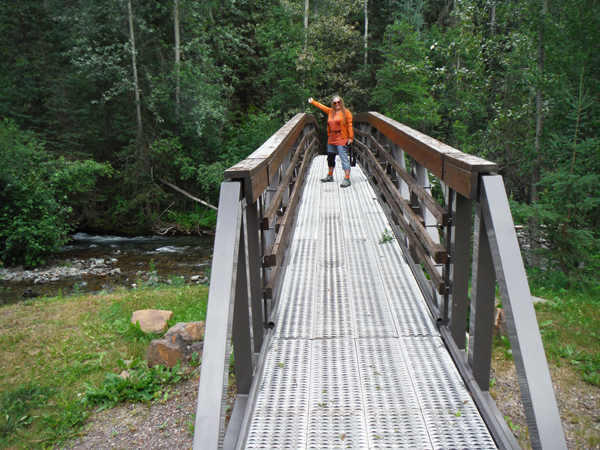
and Karen Duquette walked across a small wooden bridge that crossed
Driftwood Creek. The bridge was not in the best of shapes, because the
part people walk on had dips that made Karen Duquette trip. But luckily,
she did not fall nor get hurt. |
|
|
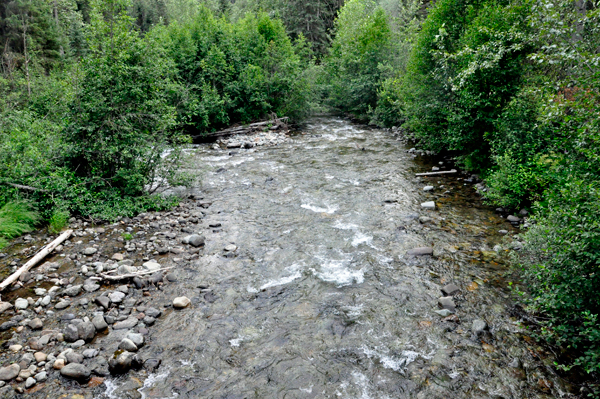
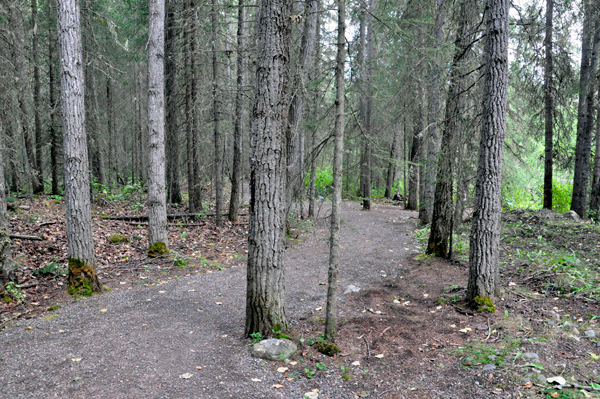
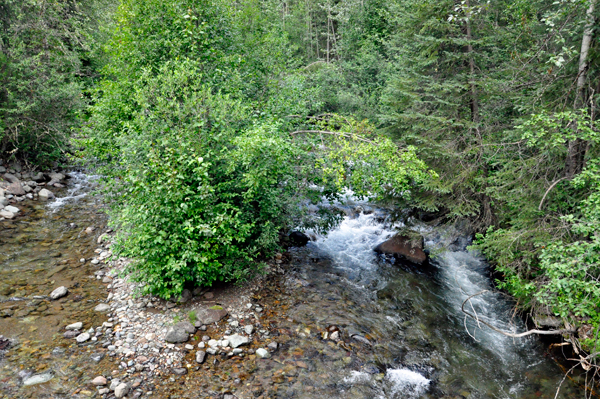
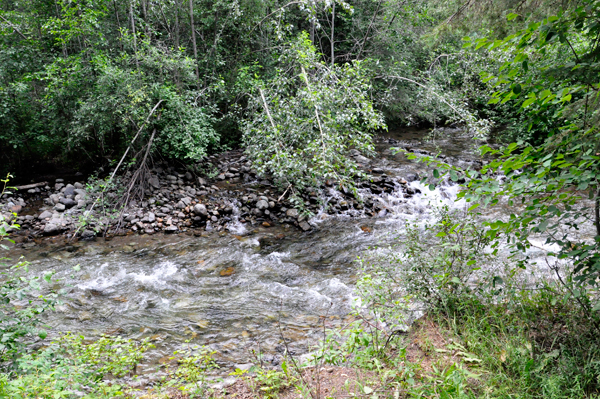
Below: A short interpretive
trail gave Lee and Karen Duquette glimpses of Driftwood Creek. The trail
led to a cliff-face exposure of Eocene shales that were deposited in
an inter-montane lake. |
|
|
|
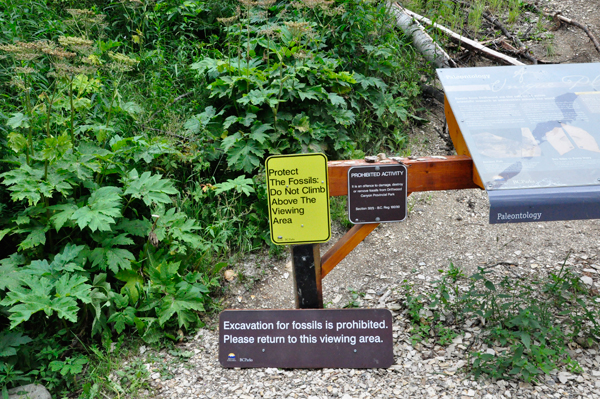
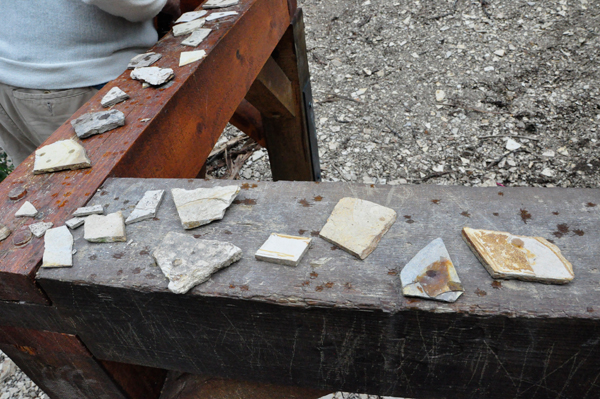
Below: After a short walk, Lee and Karen
Duquette came to the end of the trail and a big hill that was blocked
off. The hill of shales was interbedded with volcanic ash beds, the
result of area volcanoes that were erupting throughout the life of the
Eocene lake that produced the shales. Preserved within the shale formations
were plant, animal and insect species that inhabited the area over 50
million years ago. Pieces were laid out on a railing for examination
by visitors. |
|
|
The BC Parks management plan for Driftwood Canyon Provincial Park
lists these conservation attributes: internationally-significant Eocene
fossil beds: most northerly site in North America with fossilized Eocene
insects; fossils also include ancestral salmon, trout and suckers, including
Eosalmo driftwoodens, a site of ongoing paleontological research.
Limited personal fossil collecting was originally permitted in Driftwood Canyon Park, and the site is listed in several tourism and rock collection guides as a place to visit for this activity.
 However, this activity is no longer allowed here. However, this activity is no longer allowed here. |

 Visit sites in the order they happened and continue on to